
Red Dot vs Holographic vs Reflex Sights – A Beginner’s Guide
Posted by Jon Jackoviak on Oct 30th 2025
Introduction
Red dot, reflex, and holographic sights are all optics that help you aim quickly by projecting an illuminated reticle (usually a dot) onto your target. They share the same goal – target acquisition – but differ in how they work and their advantages. In this guide, we’ll break down each type and help you decide which sight best suits your needs.
Red Dot Sights (Tube Style)
A red dot sight often refers to an enclosed tube-style reflex sight. It uses an LED emitter and a front glass with special coatings to reflect a dot back to your eye. The result is a bright dot that appears on your target wherever your barrel is aimed. The tube housing surrounds the optics, protecting them from the elements (rain, mud, snow) and from damage.

Pros: Tube red dots are known for their ruggedness and reliability. They also have excellent battery life – the efficient LED can run for thousands of hours (many last 5 years on a medium setting). The enclosed design means you can use them in any weather as long as the lenses stay clear. They typically use a small, precise dot (commonly 2–6 MOA in size) for accurate aiming.
Cons: Tube red dots tend to be bulkier and heavier than other sight types. The tube can slightly restrict your field of view (you may feel like you’re looking through a small tunnel), though this is mitigated by shooting with both eyes open. They are generally too large for handguns, so they’re mostly used on long guns. Another downside is that if you add a magnifier behind a red dot, the dot is magnified along with the target, making the reticle appear larger and less crisp at long range. Despite these downsides, tube red dots remain very popular for rifles and shotguns among everyone from hunters to the military.
Reflex Sights (Open Style)
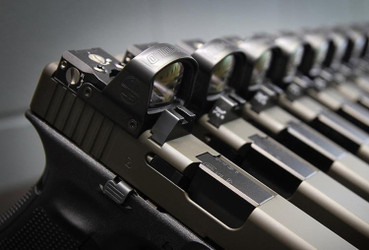
A reflex sight in everyday terms usually means an open-style red dot sight. This sight uses the same basic LED-and-lens system to project a dot, but it doesn’t enclose the optics in a tube. Instead, an open reflex sight has a single small lens (or window) and an exposed LED emitter. You look through the window and see the dot on your target. With no tube, the view is less restricted, improving your situational awareness. Reflex sights are compact and lightweight, which makes them ideal for handguns and also useful on rifles where you want to save weight.
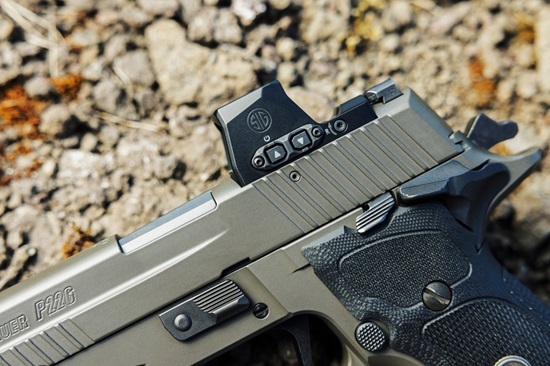
Pros: The main advantages are size and speed. Open reflex sights are the smallest and lightest type – perfect for pistols or lightweight builds. They offer a wide field of view since there’s no tube blocking your peripheral vision. This can translate to fast target acquisition; it’s easy to pick up the dot quickly and get on target. Like other red dots, they also have long battery life (thanks to the LED technology). Some reflex sights even offer multiple reticle patterns (for example, a dot or a circle-dot) to suit your preference.
Cons: The open design means less protection for the optic. Rain, dirt, or snow can land on the lens or block the emitter, potentially obscuring the dot. In bad weather or dusty environments, they require more care. They are also a bit less rugged – a hard bump could knock the alignment or crack the exposed lens more easily than with a tube sight. Additionally, because of their small size, some models have a smaller viewing window, which can be tricky for first-time users until they get used to finding the dot. (Newer designs have improved window size while keeping things compact). Like tube red dots, if you use a magnifier, the dot will enlarge along with the target. Nonetheless, for pistols and close-range shooting, open reflex sights are widely used and highly effective.
Holographic Sights
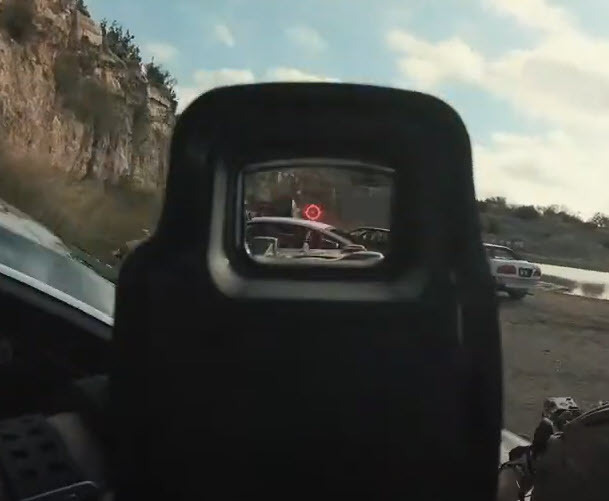
Holographic sights are a different technology altogether. They may look like an open reflex sight (they often have a rectangular window and a larger body), but internally they use a laser and holographic film to create the reticle you see. In a holographic sight, a laser projects a hologram of a reticle (often a small center dot plus a larger ring) into the sight’s viewing window. The aiming reticle appears to float out in front of the sight over the target. Holographic sights run on batteries as well, but the laser draws more power than an LED, so they have significantly shorter battery life.

Pros: Holographic sights offer excellent reticle clarity and speed. The reticle can be very fine (typically a 1 MOA center dot) with a holographic pattern like a 65 MOA circle around it. This gives you both precision and quick acquisition. Unlike standard red dots, when you use a magnifier with a holographic sight, the reticle does not get larger – only the target is magnified. This means you can engage at distance with a magnifier without the dot obscuring the target.
Holographic sights also have large viewing windows and are forgiving to eye position. Even if you’re looking through the window from an off-angle, you’ll still see the reticle as long as any part of the window is intact. Even with a cracked front lens, a holographic sight will still function, whereas an open reflex sight can fail if dirt or damage blocks its exposed lens. These sights are built to be highly durable and are combat-proven.
Cons: You’ll likely feel the most impact from holographic sights in their cost, limited battery life, and bulkier size. Holographic sights are generally the most expensive type of optic. They also burn through batteries faster. Often around 500 to 1,000 hours on a single battery, versus tens of thousands of hours for an LED red dot. You’ll need to remember to turn them off when not in use, or carry spare batteries. They are also bulkier and heavier than reflex sights, adding noticeable weight to your setup. Lastly, the technology is more complex, so there are fewer manufacturers (mostly EOTech).
Key Factors to Consider
When choosing between a red dot, reflex, or holographic sight, keep the following factors in mind:
- Cost: Red dot and reflex sights come in a wide range of prices (including many budget-friendly options). Whereas holographic sights are generally pricier and have fewer manufacturers. Decide what fits your budget.
- Battery Life: LED-based red dots (including reflex sights) have much longer battery life than holographic sights. For example, 50,000 hours vs. 500–1,000 hours is a common comparison. If you don’t want to worry about frequent battery changes, this is important.
- Size & Weight: If you need a very compact or pistol-compatible sight, an open reflex is the way to go. Tube red dots are a bit larger but still fine on most rifles. Holographic sights are the heaviest/bulkiest of the three, so make sure your firearm can accommodate that.
- Durability: All three types can be durable, but enclosed tube red dots and well-built holographic sights generally handle abuse and harsh conditions best. If you anticipate rough use, consider this factor.
- Field of View: Holographic and open reflex sights offer a broad, open view for fast targeting, whereas a tube red dot can feel like looking through a tunnel. Think about how important an “uncluttered” view is to you.
- Ease of Use: Compared to traditional iron sights, these optics make it easier for beginners to aim quickly and accurately. There’s little to no learning curve – just put the dot (or reticle) on the target and shoot. Reflex and holo sights tend to be the fastest for close-range shooting due to their wide view and intuitive sighting. Red dots are very simple to operate and maintain (often just an on/off brightness dial, and batteries last so long you can leave them on). Consider which fits your use case – a home-defense rifle might benefit from the always-on readiness of a red dot, whereas a competition shooter might favor the speed of a holographic or reflex sight.
Conclusion
In summary, consider how each sight’s strengths align with your needs. If you want a tough, long-lasting, and straightforward optic for all-purpose use, a red dot (tube style) is hard to beat. If you need lightweight and fast, an open reflex sight is fantastic for close-range work and pistols. If you crave the advanced features (like the magnifier-friendly reticle) and don’t mind the extra cost and battery usage, a holographic sight will serve you well.
For beginners, any of these optics will be a huge upgrade over iron sights. Think about whether you prioritize ruggedness, light weight, or advanced features, and what firearm you’re putting it on. Match the sight to your needs, and you’ll be set to enjoy faster and more confident shooting.